Training Details
3-DAY TRAINING, 1-3 JUNE @ MEERVAART AMSTERDAM
TICKET PRICE: €1900 EX BTW
This three-day, hands-on training course is designed for security and engineering professionals who want to deepen their practical skills in advanced fuzz testing on UNIX systems. Fuzzing is complex and a moving target - even current state-of-the-art AI models cannot create effective fuzzing campaigns. Participants learn the complete end-to-end fuzzing workflow - from target selection and build/instrumentation to harness design, corpus strategy, coverage-guided optimization, and crash triage - using modern fuzzing frameworks including AFL++, LibAFL, honggfuzz, and libFuzzer. The course covers both source-available and binary-only targets, with a strong emphasis on repeatable techniques, performance tuning, and campaign operations. We also talk about where AI can effectively used to save your valuable time :-)
Training Outline
Day 1: Foundations and Workflow with AFL++
- Overview of Fuzz Testing: Key Concepts, Threat Model, and Practical Outcomes
- The End-to-End Fuzzing Workflow: Target => Harness => Corpus => Campaign => Triage
- Setting up the Fuzzing Environment: Toolchain, instrumentation, and run-time knobs
- AFL++ in Depth: Core operation, modes, and performance tuning basics
- Hands-On Lab: Fuzz a simple target with AFL++ (from build to first findings)
- Coverage & Observability: What to measure, how to interpret it, common pitfalls
- Crash Triage Essentials: Reproducibility, minimization, and initial deduplication
Day 2: Harness Development and libFuzzer (with targeted honggfuzz modules)
- libFuzzer Architecture and Practical Usage in Real Projects
- Harness Design Patterns: state reset, determinism, timeouts, input shaping
- Sanitizer-driven Bug Finding: practical configuration and debugging workflows
- Dictionaries and Seed Strategy: making coverage-guided fuzzing converge faster
- Hands-On Lab: Implement and tune a custom libFuzzer harness
- honggfuzz Overview: strengths, typical use cases, and integration patterns
- Coverage Analysis for libFuzzer / honggfuzz: interpreting signals and next steps
- Reachability Analysis: identifying promising entry points and code regions
- Using AI for harnessing
- Using AI for unlocking coveragen
Day 3: Binary-only Fuzzing and Running Successful Campaigns
- Fuzzing Binary-only Targets: practical strategies and tradeoffs
- Emulation Techniques: user-space vs system-level approaches, persistence patterns
- Hands-On Lab: Fuzz a **binary-only network service** end-to-end
- Crash Triage at Scale: bucketing, deduplication, minimizing, and reporting
- Comparative Decision Framework: AFL++ vs LibAFL vs honggfuzz vs libFuzzer
- Running Successful Fuzzing Campaigns: monitoring, stop criteria, iteration loops
- Sizing Fuzzing Servers: capacity planning, throughput optimization, and stability
- Triaging with AI
- Limits and chances for AI in fuzzing
Prerequisites
- Comfortable building and running software on UNIX (shell, build tooling).
- Ability to read and modify C/C++ code (labs are C/C++ oriented).
- Familiarity with debugging basics (gdb/lldb) is helpful.
Hardware & Software requirements
- A UNIX laptop, minimum 20GB disk space free and 16GB RAM
- Native Linux Ubuntu 24.04 recommended, other Linux or macOS is OK too
- Docker installation
MARC "VANHAUSER" HEUSE
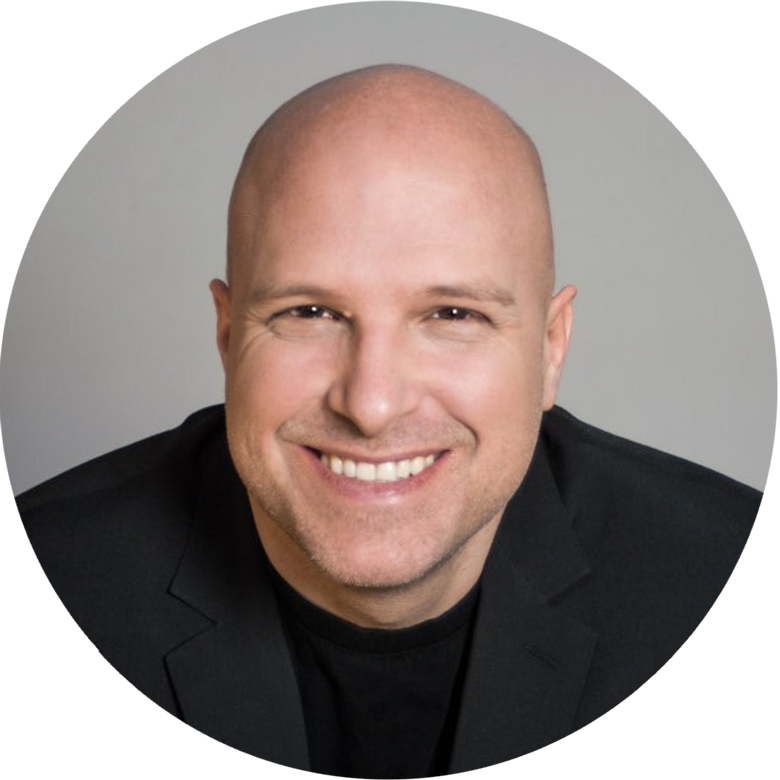
Marc "vanHauser" Heuse is a seasoned security researcher renowned for his significant contributions to the field of fuzzing, particularly with AFL++. His work has played a pivotal role in advancing fuzzing techniques, aiding in the discovery and rectification of numerous software vulnerabilities. He is also well known for founding The Hacker's Choice (THC) where he releases well-known tools like hydra, thc-ipv6, amap, THC-Scan and many others.